Why I Won't Allow Beef Short Rib on My Menus
By Natalie Goldenberg-Fife
Founder, Gold & Fife
Originator of experiential concepts and platform-driven event strategy
@goldandfife_
Pssst. I’m going to share one of my magic tricks, in the spirit of offering simple strategies that make events feel customized, intentional, and unforgettable.
It’s one of the pillars of good-to-great menu curation.
It requires discernment. It separates you from the pack. And it usually requires a gentle pushback. Because you cannot take the first menu a chef or caterer offers you.
(Rare, I know.)
But that small moment of resistance makes everything better: you, the chef, and most importantly, the guest or client experience.
This is what keeps food at an event from tasting like event food. And let’s go further: if you’re planning a wedding, this is what prevents your wedding food from tasting like wedding food: mass-produced, slightly soulless, overly safe.
Here it is:
I don’t allow beef short rib on my menus.
I could be wrong, but I’d wager that 99.9% of events, even those featuring our country’s top and Michelin-starred chefs, will default to a version of short rib as the main.
If you’ve planned a wedding, a private dinner, or an event for more than ten people, you’ve encountered it. Guaranteed.
So here’s my PSA to industry folks, event planners, wedding planners, and enthusiastic hosts of all kinds:
Say no to short rib. (That is, if you care about differentiation.)
Why?
Because it’s essentially fool-proof.
Why Beef Short Rib Is Everywhere
It’s built for forgiveness Short rib is loaded with collagen and fat. Long, slow heat turns mistakes into silk. Overcook it? Still tender. Undercook it? Give it more time. It actively absorbs incompetence.
Braising does the work Most short rib is simply seared, submerged, and left alone. Once it’s in liquid at a low temperature, time replaces skill. No constant tasting. No split-second decisions. No finesse at the pass.
It tastes rich even when it’s boring Fat + gelatin = mouthfeel. Even a basic wine-and-stock situation reads as “luxurious.” The meat does the heavy lifting, not the cook.
It reheats beautifully This is the killer feature for events: It holds for hours. It reheats without drying out. It often improves overnight.
It scales effortlessly Cooking ten portions versus three hundred requires: the same technique, the same timing, almost no added precision.
Which is exactly why it’s the darling of banquets and “safe” luxury menus.
It photographs well Dark, glossy, lacquered meats read as indulgent in low light. It looks expensive, even when it’s doing very little.
Guests already know how to like it No education required. No tension. No risk. No surprise.
This is not the type of experience I’m interested in producing, nor am I ever excited about eating it as a guest.
You’re not rejecting short rib because it’s bad. You’re rejecting it because it asks nothing of the chef and therefore, mostly nothing of the guest.
Repeatability is the enemy of magic and memorability.
A Pro Tip from the Field
Have the “no short rib” conversation in your first menu-planning session.
When I was Culinary Director for the Visa Infinite Dining Series, it was actually written into the contract.
Yes. Really.
One example from an agreement with BUCA Restaurant:
Agrees to provide canapés during the reception (4 per guest)
Agrees to provide a menu that does not include braised short ribs
Agrees to provide still and sparkling water during dinner
Agrees to provide coffee service following dinner
Menu to be approved four weeks in advance
Chef to be onsite for the entire event
This wasn’t about control. It was about intention.
Because All Rules Are Meant to Be Broken (Occasionally)
In the past ten years, I’ve allowed short rib exactly twice.
The first was within the context of Cooking in the County, a federally and provincially funded culinary development initiative I created and led to strengthen the Prince Edward County hospitality sector.
The program paired hands-on courses, panel discussions, and ambitious ticketed dinners, designed to build real technical skill, leadership confidence, and creative risk-taking. It wasn’t about playing it safe. It was about raising the bar.
One dinner, The Art of Holiday Classics, was part of an eight-event series inviting guest chefs to reinterpret tradition through craft, flavour, and a sense of play.
For that evening, celebrity guest chefs Connie DeSousa and John Jackson from Calgary's CHARCUT presented their pièce de résistance:
Pile o’ Bones Bone marrow stroganoff Slow-cooked Alberta beef short ribs Roasted giant bone marrow Local foraged mushrooms and soft polenta Finished with shaved local vegetables, sour cream, and dill.
This wasn’t short rib as a default main. This was short rib as theatre. As excess with intention. As a dish that could never be mistaken for banquet food.
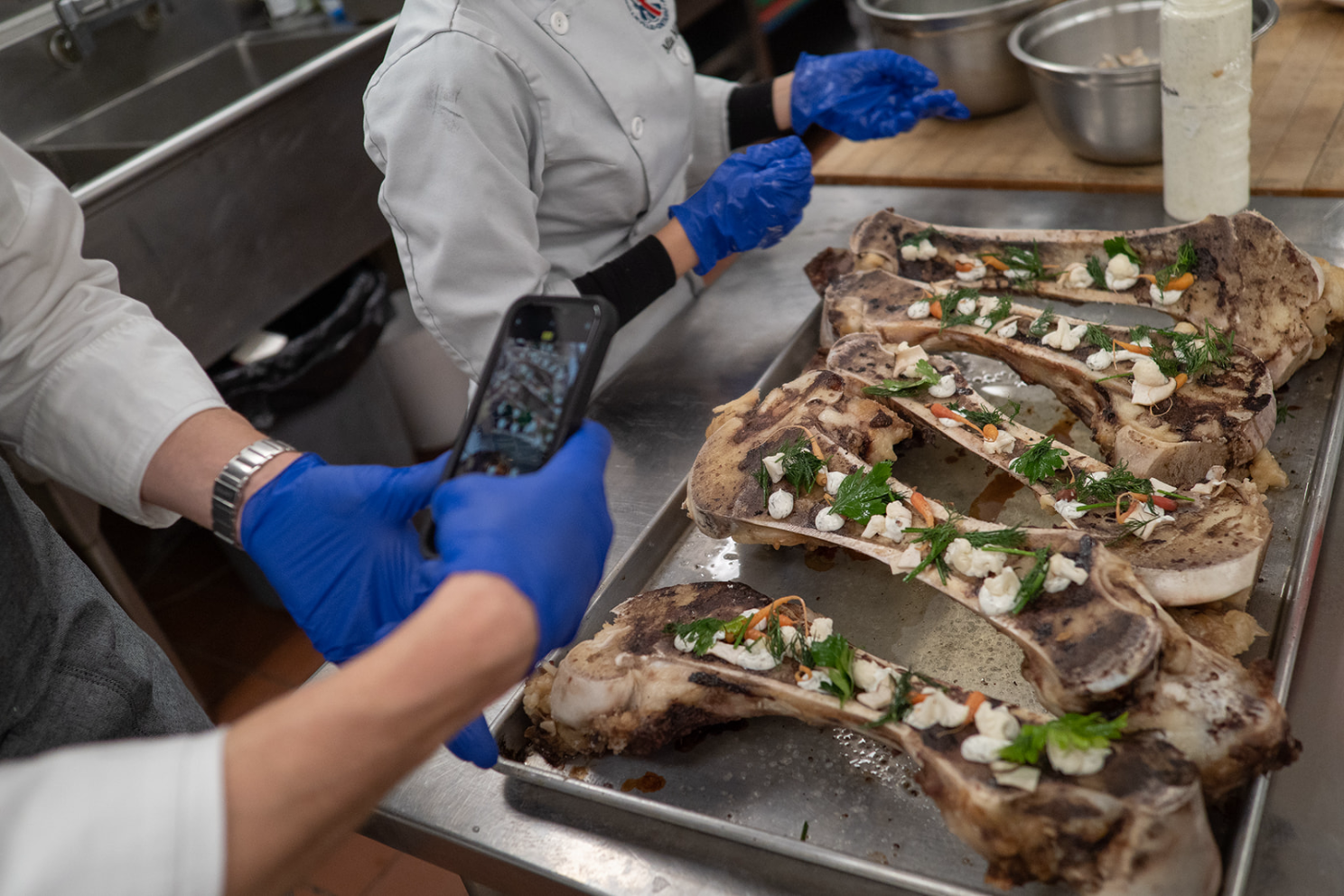
A show-stopper short rib dish by Chefs Connie DeSousa and John Jackson.
The real kicker came tableside, when Connie, John, and I moved through the room pouring small shots of Jack Daniel’s directly from the bone marrow into guests’ mouths—an unexpected moment of surprise, humour, and shared delight.
At The Waring House, among guests many well over sixty, it landed exactly as intended. Laughter. Shock. Connection. A memory that still gets talked about
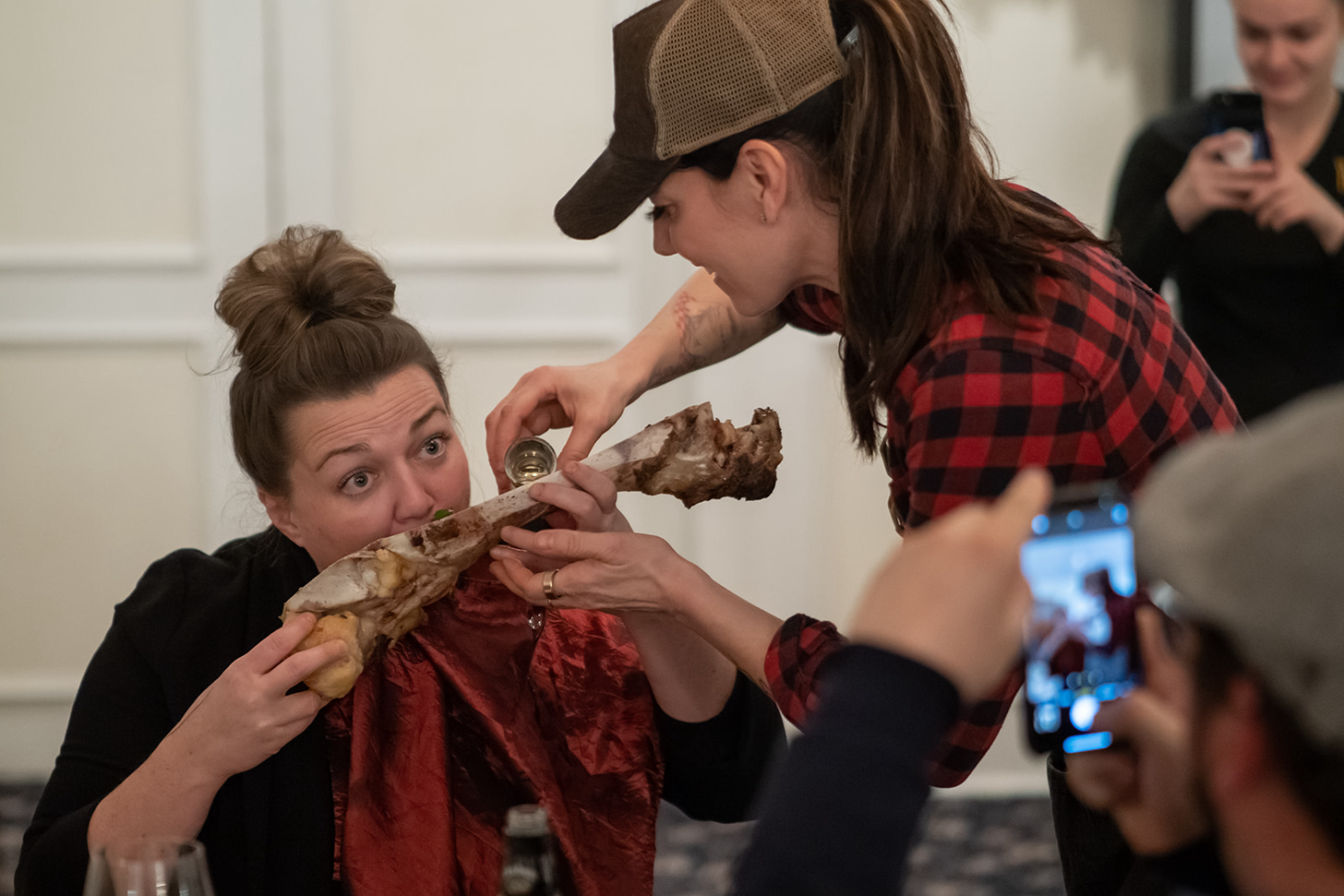
Table side whisky shots from bone marrow.
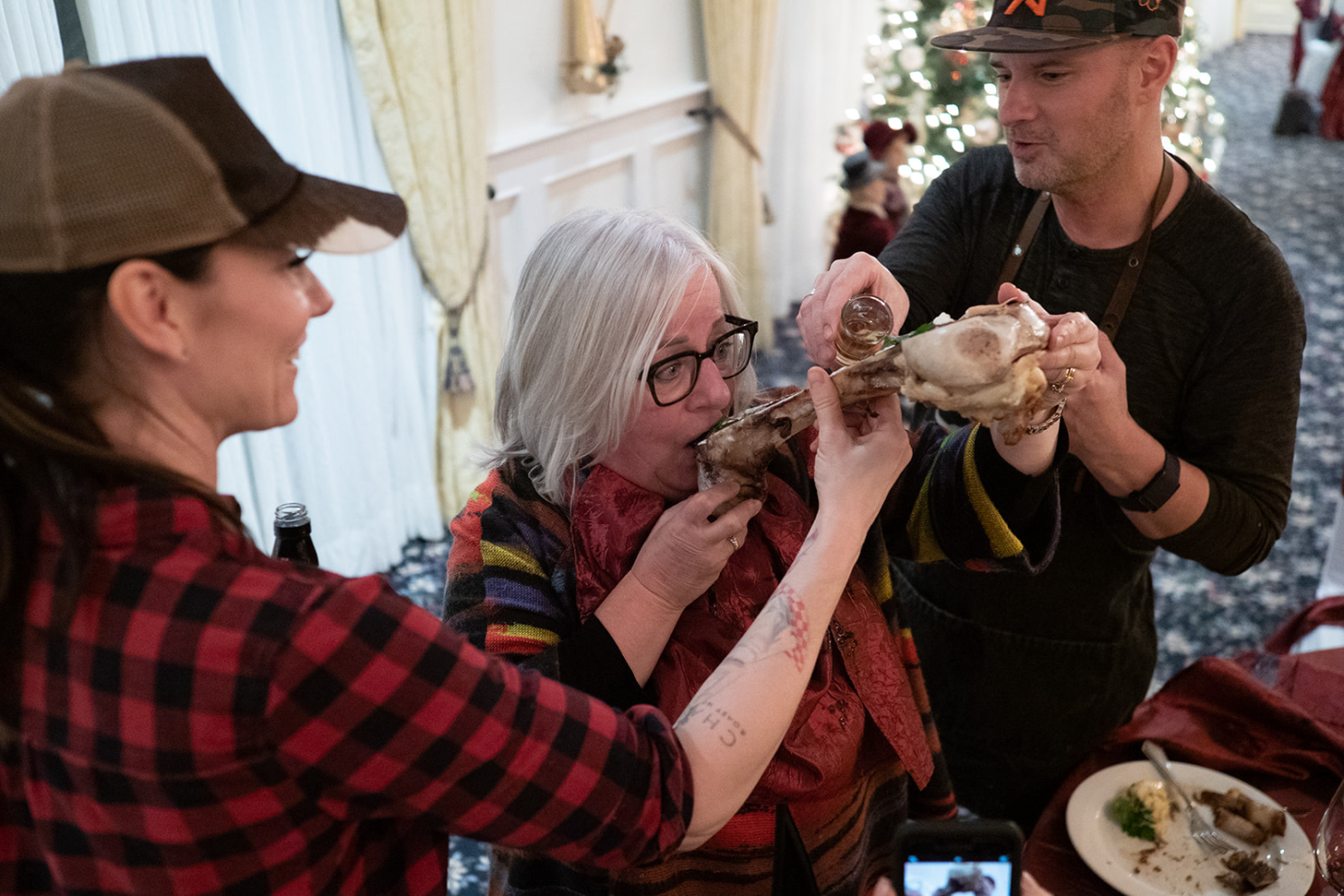
Shock. Surprise. Inevitable delight.
That’s the threshold.
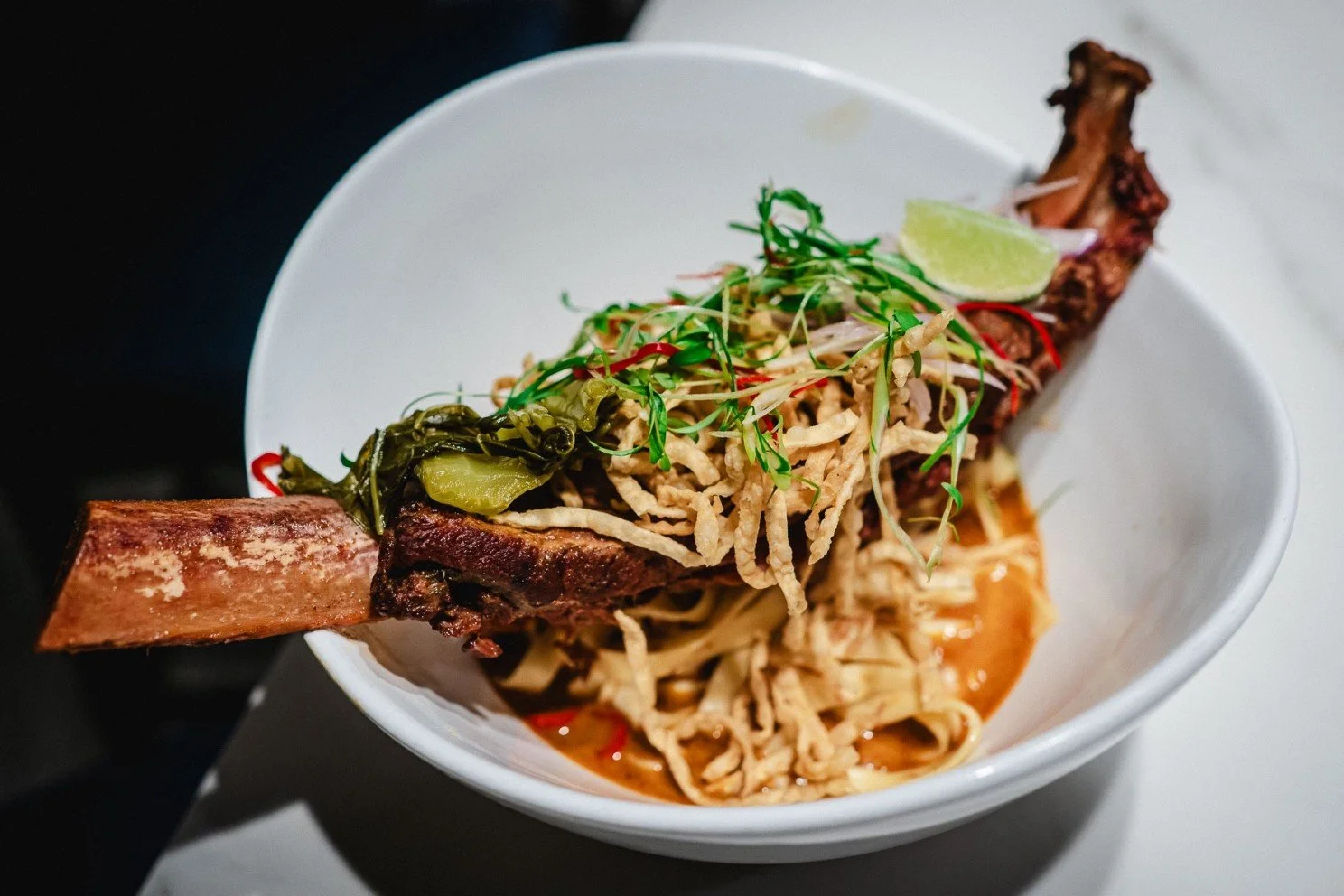
Short rib flavour spectacle by Chef Nick Liu.
The second time was during Kingstonlicious, a program I designed and led for four years, built around two pillars: prix fixe menus to draw diners into restaurants during shoulder season, and guest-chef signature experiences that gave chefs permission to step outside their usual service and take real creative risks.
It was within that context that Nick Liu of DaiLo served a slow-smoked dinosaur rib (beef) with curried hand-cut noodles, pickled mustard greens, and a fried egg-noodle garnish.
It had flavour. It had spectacle. It had intention.
The Translation
If you’re going to surrender to short rib, it must stop the show.
No red-wine-gravy-peppercorn-blah sauce. No banquet default.
It needs: bold flavour architecture, creative risk, a moment of surprise, something guests have never experienced before.
Otherwise, don’t bother.
That’s my stance. It’s a bold one.
I’d genuinely love to hear what you think!
Do you agree, or is short rib still sacred ground?
Concept, Narrative & Original Text by Natalie Goldenberg-Fife of Gold & Fife.
Gold & Fife is an experiential agency specializing in culinary, hospitality, and cultural programming, leading Concept & Creative Direction for Oliver Farm’s event programming.